Free Presentation — Respiratory Health Research
A Respiratory Expert Discovered Why Your Lungs Won't Clear — And the Simple Daily Ritual That's Helping Thousands Finally Breathe Easier
You’ve tried the inhalers. The syrups. The decongestants. Maybe even the home remedies your friends swear by — baking soda, apple cider vinegar, steam showers. And yet the mucus keeps coming back. The chest tightness returns. The coughing fits won’t let up.
What if the reason nothing has worked isn’t your lungs — but something invisible in the air you breathe every single day?
A leading respiratory health expert has spent years researching why so many Americans struggle to clear chest mucus despite doing everything their doctors recommend. What she found surprised even her — and it may finally explain what’s been blocking your breathing all along.

Short, educational video — no cost, no sign-up required
If Any of These Sound Familiar, This Presentation Is for You

- Constant coughing and thick phlegm you just can't clear — no matter what you try
- Waking up with chest tightness or that heavy, congested feeling every morning
- Feeling embarrassed in public when you can't stop coughing or clearing your throat
- Skipping activities with family because you can't keep up without running out of breath
- Trying treatment after treatment, only to get temporary relief — never real improvement
- That nagging worry in the back of your mind that things are slowly getting worse
What’s Actually Causing Mucus to Build Up — and Why Common Remedies Often Miss It
Your lungs produce mucus for a very good reason. It’s your body’s way of trapping dust, bacteria, and airborne particles before they reach your bloodstream. Under normal conditions, that mucus flows out of your airways on its own — keeping your lungs clean and your breathing clear.
But here’s what most people — and even most doctors — don’t realize: a specific airborne toxin, now found almost everywhere in the U.S., can cause the mucus in your airways to behave in an entirely different way. Instead of flowing out, it thickens and hardens. It builds up. It gets trapped.
And once mucus is trapped in your airways, even a minor cold, allergy flare, or change in air quality can turn into weeks of congestion, coughing, and labored breathing.
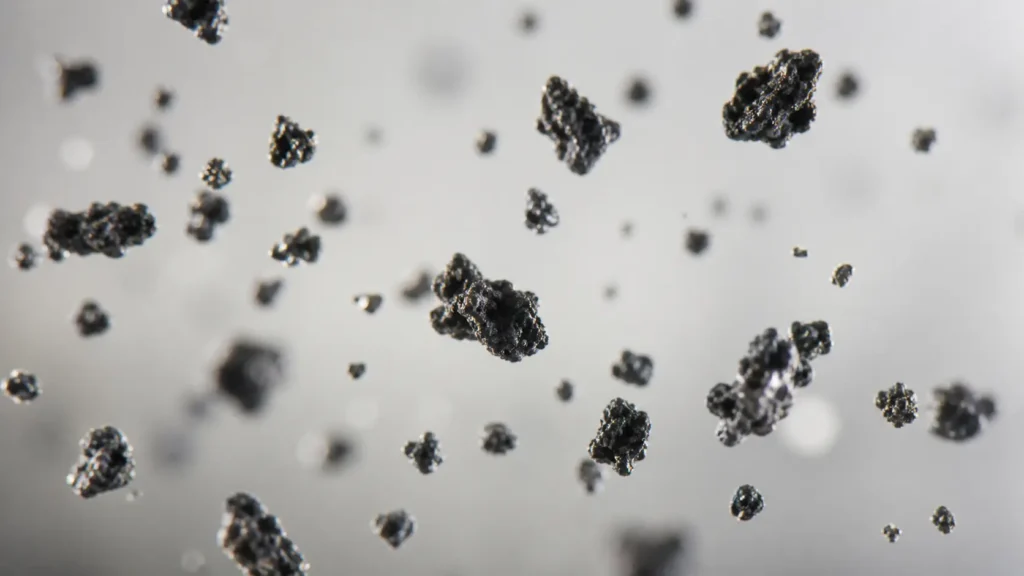
When mucus nets go into overdrive
Your airways contain microscopic structures called mucus nets — their job is to trap dust, bacteria, and airborne particles so they can be cleared out naturally. But exposure to a specific airborne toxin triggers your body to overproduce them. Instead of flowing out, they pile up.

How mucus hardens and gets trapped
As excess mucus nets accumulate, they create a traffic jam in your airways. Mucus that should flow out gets stuck — and the longer it stays, the thicker it becomes. Researchers compare healthy mucus to melted butter and trapped mucus to cold, hardened butter. Once it hardens, it doesn’t budge on its own.

Why trapped mucus leads to recurring infections
Hardened, trapped mucus doesn’t just block your airways — it holds the bacteria, allergens, and pathogens it originally captured. With no way out, they accumulate and create an environment where infections keep returning. This is why so many people with chronic mucus issues also experience frequent coughs, bronchitis flares, and slow recovery from colds.
What the Research Shows
New research published in the American Journal of Respiratory Cell and Molecular Biology identified microscopic structures inside your mucus — called neutrophil extracellular traps (or "mucus nets") — that play a critical role in whether your lungs can clear themselves. When these traps go into overdrive, they stop working as a natural filter and start creating a traffic jam in your airways. The result: trapped, hardened mucus that your body struggles to clear on its own.
The 4 Stages of Worsening Mucus Buildup — Where Are You Right Now?
Mucus buildup rarely stays the same. For most people, it slowly progresses — and the earlier it's caught, the easier it is to address. See if you recognize where you are in this pattern:

The Early Signals
A persistent cough, more throat-clearing than usual, occasional congestion. Easy to dismiss as allergies or a passing cold — but your airways may already be affected.

The Tightening Grip
The cough becomes regular. Chest congestion is harder to shift. Simple activities leave you more winded than they should. The mucus is building.

The Daily Battle
You're constantly aware of your breathing. Inhalers or medications provide some relief but the problem keeps returning. Sleep is affected. Your energy is depleted.

The Breaking Point
Chronic infections, persistent fatigue, and increasing dependence on medications. Everyday tasks feel like a physical effort. You're frustrated and looking for real answers.
No matter which stage describes you, there's something important you should hear — because it may explain everything your current treatments have missed.
Why Standard Treatments Often Provide Only Temporary Relief
Inhalers, steroids, decongestants, and mucus suppressants are designed to manage symptoms. And they can offer short-term comfort when you’re in the thick of a bad spell. But many respiratory experts are now asking whether these treatments actually address what’s causing mucus to build up in the first place.
The short answer, according to new research: most of them don’t. They work on the surface — without touching the underlying reason your airways are becoming congested to begin with.
That’s the core of what this free presentation covers: the actual mechanism behind trapped mucus buildup, and a natural daily approach that works at the source rather than the symptoms.
What the 7-Second Mucus-Clearing Ritual Actually Does

The presentation you’re about to watch reveals a research-backed daily routine that targets the root cause of mucus buildup — specifically the airborne toxin responsible for triggering excess mucus production in your airways. It draws on natural ingredients with documented efficacy from institutions including the Cleveland Clinic, Columbia University Medical Center, and peer-reviewed journals.
No special equipment. No complicated exercises. Nothing you need a prescription for. Just a simple, daily habit that thousands of people have already incorporated into their routines — and report a noticeable difference within days.
Close to 50,000 people have already viewed this presentation
Common Questions Before You Watch
Completely at home. The approach covered in this video requires no equipment, prescriptions, or appointments. It’s designed to fit into a normal daily routine, regardless of how busy your schedule is.
The presentation was created specifically for people who feel like they’ve already tried everything — including those dealing with conditions like asthma, COPD, chronic bronchitis, post-nasal drip, and long COVID. The mechanism being addressed is relevant regardless of how long you’ve been struggling.
Most common solutions focus on clearing mucus after it’s already built up. This approach works differently — it addresses why mucus is overproducing in the first place. That’s a meaningful distinction, and it’s the focus of what’s covered in the video.
Yes. The presentation references published research from the American Journal of Respiratory Cell and Molecular Biology, the Cleveland Clinic, Columbia University Medical Center, and other peer-reviewed sources. You’ll be able to follow along and evaluate the evidence for yourself.
Individual results vary, and this presentation doesn’t make guarantees. That said, many of the people who’ve used this approach report noticing changes in their breathing and congestion within the first few days. The video explains what to realistically expect.
Privacy Policy | Terms of Service | Disclaimer | Contact